How to handle a low eCPM stretch without panicking

Jul 1, 2026 · 7 min read

A bad revenue day is usually noise. A bad week is a signal. Here is how to tell them apart and respond systematically instead of emotionally.
Your eCPM drops, and the instinct is to change everything at once. Resist it. Most single-day dips are noise, part of how ad demand naturally moves. The publishers who lose money in these stretches are the ones who react emotionally instead of systematically.
First, understand what eCPM actually reflects. It is not just how much traffic you have, it is how much your ad quality and reader engagement are worth to buyers right now. Volume without engagement does not move it.
Give it a few days before you act. A one-day drop is normal. If the decline holds past four or five days, now it is a signal worth investigating, not a blip to wait out.
Start with viewability and engagement, because that is what buyers are pricing. If ads are not being seen or readers are bouncing, no floor tweak will save the number. Fix the thing advertisers are actually paying for.
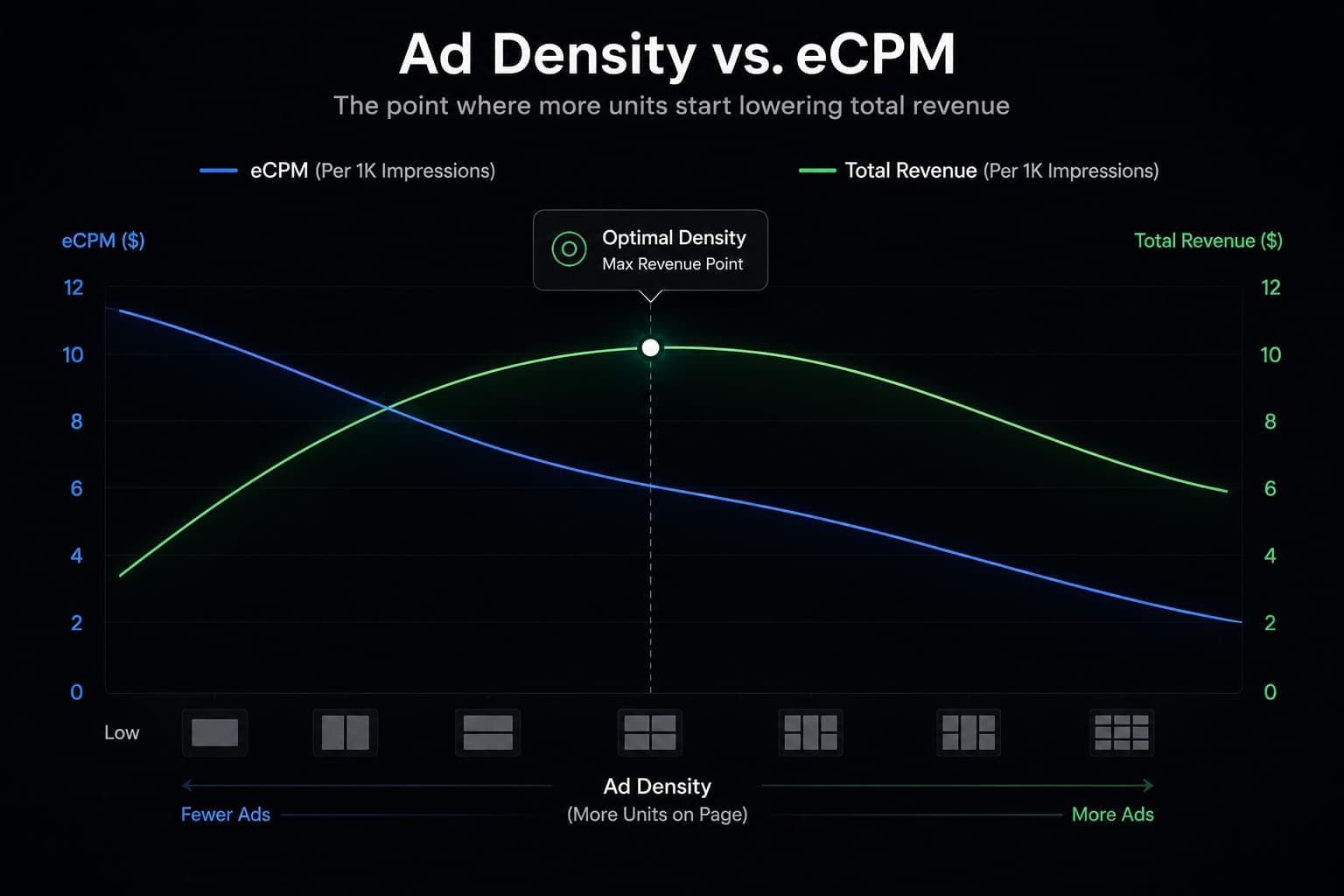
Check your ad density. Past roughly 30 percent of a page's content height, more ads tend to cost you: slower pages, worse experience, cheaper inventory. Pulling back can lift eCPM even though it feels backwards.
Adjust floors instead of holding the line. During a genuinely slow period, dropping floors around 10 to 15 percent can recover fill you are otherwise losing to buyers who have pulled back. You raise them again when demand returns.
Expect the seasonal dips. Ad budgets sag after Q4, in mid-summer, around known lulls. If you know they are coming, you plan around them instead of scrambling when they hit.
Clean up the mechanical stuff. Slow ad loading and asynchronous bottlenecks quietly cost you bids. So does low-quality traffic that engages poorly and drags your averages down. Cut the sources that never convert to real attention.
Watch your demand partners individually. An aggregate dip often hides one partner falling off. Break it out, find the culprit, and you fix the actual problem instead of the whole stack.
Watching eCPM slide and not sure which lever to pull? We diagnose the drop and tune floors, demand, and placements for you.
Get helpChange one thing at a time and track it, or you will never know what worked. A low eCPM stretch is not a crisis, it is a diagnostics exercise. Treat it like one and you come out knowing your setup better than before.
Want this kind of optimization on your own site? Get Started.